




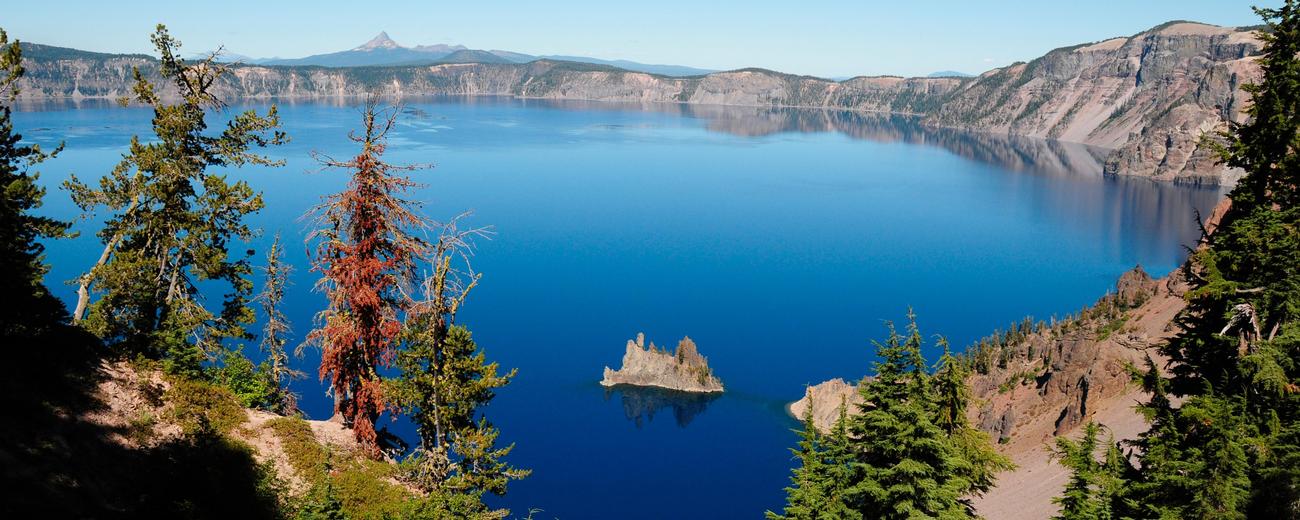




When Mount Mazama erupted a little less than 7,000 years ago, its center imploded to form a caldera that gradually filled up with water, creating Crater Lake. With depths of 1,932 feet, it is the deepest lake in the United States (the seventh-deepest in the world) and is known for its stunning, sapphire blue color. In 1902, Congress established the lake and some 180,000 surrounding acres as the nation's fifth national park, and Oregon's first and only.
Crater Lake National Park is technically open year-round, although July and August are the most popular months for visitation; snowdrifts can close roads as late as early July, and winter services are extremely limited due to heavy snow. There are no overnight accommodations in the park from mid-October to mid-May, and visitors are not allowed to sleep in vehicles. Nonetheless, some intrepid visitors partake of seasonal cross-country skiing, snowshoeing, and winter camping.
Crater Lake is encircled by subtly colored cliffs fringed with hemlock, fir, and pine. Late-June to mid-September, several boat tours depart daily for sightseeing tours around the lake, and the 33-mile Rim Drive accesses more than 20 scenic overlooks and several mountain trails. During this peak season, visitors may stay at any of the park's 214 camp sites, cabins, or historic Crater Lake Lodge.
Access to the park is by one of three entrances on the North, South and West side. The South and West entrances are open year round. The North entrance, by way of route 138, is closed in the winter and spring. Dates vary, but generally the entrance is open from late June through the end of October.
Crater Lake National Park is located in southwest Oregon. To learn more about the area, please select a topic of interest from the navigation bar on the left.